Capital and Ideology
French economist Thomas Piketty.

Capital and Ideology is a book written by French economist Thomas Piketty that was published in 2019. The book builds on Piketty's previous research on income inequality and wealth distribution, examining the ways in which different societies have structured their economies and political systems around notions of merit, equality, and democracy.
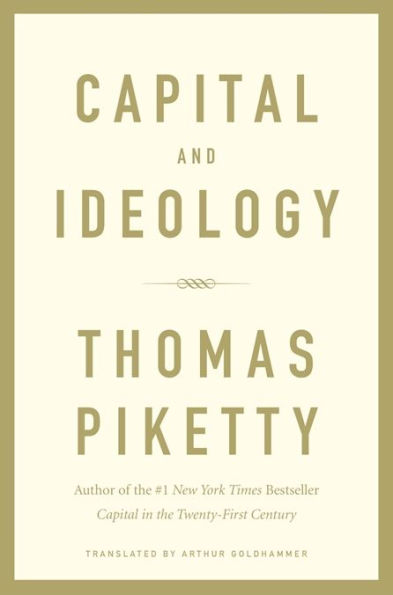
The book is organized into three parts, each of which examines a different aspect of the relationship between capital and ideology. In the first section, Piketty explores the historical and political contexts that have led to inequality and the concentration of wealth over time. This includes a detailed investigation of the ways in which colonialism, slavery, and other forms of exploitation have shaped economic and political systems around the world.

The second section of the book focuses on contemporary political and economic theories and their impact on modern societies. Piketty examines the ways in which neoliberal policies and global capitalism have contributed to widening income and wealth gaps, and explores alternative models for creating more just and equal societies.
The third and final section of Capital and Ideology proposes specific policy recommendations for addressing inequality and promoting economic democracy. These include progressive taxation, universal basic income, and greater investment in education and social programs.
Overall, Capital and Ideology is an ambitious and provocative work that seeks to challenge conventional wisdom about the relationship between capital, ideology, and inequality. The book has been widely praised for its historical and interdisciplinary approach, and has sparked renewed debate and discussion about the future of progressive politics and economic policy.
Crafted by ChatGPT