


An antagonist for my Holozing Fan Lore: The institution
0 comments

Hello Holotrainers!
I wanted to continue with my fan lore story now that I have some free time and fresh ideas. That last post where I introduced the protagonist of the story in the future gave me some pretty good ideas about what the antagonists could be like, something a bit more complex to create, no doubt, but just as interesting.
In the future timeline, I was thinking that the villain, rather than a specific person, would be an entire system of people who believe they are doing the right thing, but the protagonist disagrees and confronts them. It's a somewhat subjective situation: while the protagonist wants to find the truth about the creatures, the antagonist wants to protect that system out of fear of the consequences.

This seems like an extremely interesting concept to me. Why is this feeling of wanting to defend a system so deeply ingrained, a system where what remains of the creatures, at least in their ghost form, is treated in this way? Is it out of fear? What happened in the past that led to the creatures becoming extinct and forced to be what they are today?
That's where I want to gradually introduce the concept of:
The Institution
As time goes on, the protagonist begins to understand that the true enemy has no single face. There is no "final villain" waiting in a tower, nor a corrupted creature to defeat to make everything return to normal. The antagonist is something much more uncomfortable: an entire system, built on good intentions... and sustained by an ancient fear that no one wants to name again. ---
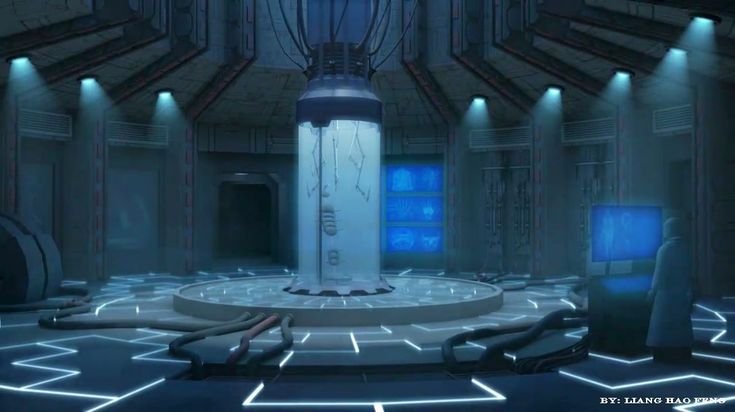
This system was born after The Rupture (we discussed this in my first post about the future timeline), when the creatures ceased to exist as living beings and began to manifest only as echoes, specters, fragments of what they once were. It wasn't a natural extinction. It was a decision.
Back then, humans and creatures coexisted, but the balance was fragile. The creatures weren't just companions or tools; something happened in between that led the creatures to a point where humanity felt compelled to remove them from the world.
The answer wasn't direct extermination. It was something "more humane," more justifiable:
containment, sealing, classification, regulation... call it what you will.
Thus, the Institution was born, an organization that proclaims itself the guardian of order and stability. For them, the creatures in ghost form are not prisoners: they are safeguarded. They are not silenced: they are protected from themselves. The system is not seen as cruel, but as necessary. Because, according to them, the last time the creatures were free, the world almost broke.

This is where the conflict becomes deeply subjective. The antagonists are not monsters or cartoonish tyrants. They are researchers, veteran trainers, archivists, leaders who genuinely believe that releasing the truth would cause another catastrophe. For them, the protagonist is not a heroine: she is an irresponsible threat, someone willing to sacrifice the stability of the present for a past that, according to them, has already proven to be dangerous.

But the protagonist disagrees.
She doesn't seek to destroy the system out of hatred, but to understand it, to question it, to force it to look in the mirror. What kind of peace is built on forced silence? What kind of world deserves to survive if it needs to deny the will of its inhabitants to remain standing?
And there, I think the conflict is more than established: a villain in the purest Big Brother style, with profound control over the world, whom the protagonist must challenge very carefully.
Comments