We went to Egypt two years ago, visited three cities and looot of interesting locations, and I am only writing about it now. The shame is mine. Actually, I wrote something short on a few occasions with just a couple of photos (you can find links to those posts below at the end of this blog), but now I realize that every part of the Egypt album deserves its own story. You cannot rush through things so easily, considering how much history is intertwined here, along with religion, of course.
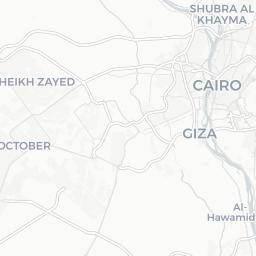
Today I am taking you through the Coptic Museum, located in the Coptic part of Cairo, at the exact address 3 Mari Gerges, Kom Ghorab, Old Cairo, Cairo Governorate 4244001, Egypt.
This is what the entrance looks like, the museum courtyard in the heart of the remains of Roman Babylon Fortress. Inside it keeps the largest collection of Egyptian Christian artifacts in the world. Somewhere I found information that it owns an incredible 16,000 artifacts, while around 1,200 are on display, which is still too much when you arrive already hungry and exhausted from previous visits to the surrounding churches in that part of Cairo. Buuut, we took it slowly, carefully observing one object at a time.

As I am writing this, I am finding information that almost everything they own is actually on display for visitors to see, "around 15,000 artifacts", which is really too much, so I am not sure, considering that I am a woman and a blonde, my estimation is not the best, so I will not claim that one is correct or that the other is not. In any case it is a huge area that the museum covers and I know we got lost a few times trying to figure out where to go next, since everything inside is like a labyrinth and at the same time wonderful and sooo beautiful.
Let's go back to some basic things that are important for the beginning. The museum was founded by Marcus Simaika, an Egyptian leader and politician, back in 1908. In fact, that year is the year when he received numerous silver antiquities from Patriarch Cyril V, as well as approval for the construction and opening of the museum, whose official opening took place on March 14, 1910.
The museum is so beautiful, with lovely large windows that let light in from all sides through their stunning patterned mashrabiya screens, which at the same time provide privacy inside. How ideal it would be if such windows were used in modern architecture, there is an idea for architects. (:
Also, the stunning stained glass from the 15th and 16th centuries creates colorful geometric and floral patterns that are reflected along the museum corridors and on the opposite walls. We did not know what to look at first.
The museum also houses entire vaults or parts of domes painted with beautiful frescoes of Jesus Christ and the Blessed Virgin, but I can't exactly remember which churches they came from; I remember they are from the 4th or 5th century AD. I hope I'm not mistaken. I also remember there was a story about The Monastery of the Prophet Jeremiah, but I can't find anything more about it online right now.
If you decide to go and visit the museum, you will definitely see what it's all about. Now, seeing how many things I missed or forgot, I wish to go again and visit all the places, to refresh my knowledge and enjoy these beauties up close once again.
These wedding crowns and garments especially caught our attention because today, in our Orthodox Church, there are also crowns like these used in weddings.
In Coptic church practice, wedding crowns (known as "stefana") have a spiritual meaning: during the wedding ceremony, the bride and groom are crowned, symbolically becoming "a church to each other", like king and queen of their new home; the crowns represent Jesus Christ's blessing on their shared life and the commitment of love. ❤️
Finally, we come to the book that is the oldest complete book of Psalms, the Psalter, from the early centuries of Christianity, approximately the 4th–5th century AD. It contains all 151 psalms, handwritten on parchment in the Coptic dialect, with wooden covers and a leather binding. It was discovered in 1984 in the Coptic cemetery in Al-Mudil, south of Cairo, and after five years of thorough restoration, it was displayed in a special room of the museum.
The manuscript was in very poor condition when they found it: the pages were stuck together, the covers damaged, and most of the text faded, but restorers carefully separated and restored the parchments. This Psalter is not only important for the history of Coptic Christianity, but also holds great significance for the study of early biblical texts, as it represents the oldest preserved complete text of the Psalms in the Coptic language.
This fresco of Saint Nicholas also caught our special attention, The Saint whom both my fiancé and I celebrate as our Slava, in both of our parents’ homes. In Serbia, we have a few common depictions of Saint Nicholas and this one is very similar to ours, almost identically painted, which made us even more amazed.
This is what the courtyard looks like at the back, when we stepped out of this wonderful labyrinth full of beautiful impressions. Somehow, from the very first step we took into the museum courtyard, even though we were thousands of kilometers away from home, we felt as if we were right there, in our own home. How faith gives a person a sense of security and warmth. ❤️
If you would like to read what I previously published about our trip to Egypt, here are a few links:
I hope you enjoyed this blog. See you again in a few days with new photos and the story that follows them. Greetings to all! ❤️
worldmappin: [//]:# (!worldmappin 30.00577 lat 31.23040 long Exploring Coptic Museum, Cairo, Egypt d3scr)
[//]:# ([//]:# (!worldmappin 30.00577 lat 31.23040 long Exploring Coptic Museum, Cairo, Egypt d3scr))


Comments